West Palm Beach remodel quote allowances: A Budget Is Not a Fixed Selection
Review remodel quote allowances alongside the written scope and product selections before choosing a West Palm Beach kitchen or bathroom remodeler, including Modernize Green Solutions (MGS). Identify what remains undecided, which labor is included, what is excluded and how you would approve any additional cost.
At a glance
- Match the scope: give every bidder the same written description of the work and products you want.
- Identify allowances: find out what each budget amount covers and which selections remain open.
- Check installation: confirm the labor included with each product or allowance.
- Get exclusions in writing: do not treat an unmentioned item as included.
- Clarify approval rules: ask how additional costs would be priced and approved before proceeding.
Similar totals do not establish that two proposals describe the same finished room. One might identify your cabinet selection and include installation. Another might leave the cabinets as an allowance without explaining the labor.
Use the worksheet below to separate written commitments from open questions. The goal is not to reject every proposal containing an allowance. It is to understand what you are comparing before choosing a contractor.
What remodel quote allowances do not settle
An allowance is a budgeted amount for an item or selection that is not fully resolved in the quote. Check what that amount covers before comparing it with a selected product and included installation.
Sort each important line item into one of these categories:
- Selected product: The proposal identifies the product and quantity. Check separately whether installation is included.
- Allowance: The proposal assigns a budget amount, but a selection or pricing detail remains open.
- Excluded item: The proposal expressly leaves the product or work out.
- Unresolved item: The proposal does not provide enough information to determine its status.
These categories keep missing information from becoming an assumption.
For example, a named kitchen faucet with a stated quantity answers a different question than "fixture allowance." The first identifies a product. The second still needs an explanation of which fixtures the amount covers and what remains to be chosen.
Neither description, by itself, establishes whether installation is included. Neither establishes a fixed price for the entire renovation.
For every allowance, ask:
- Which products and quantities does this amount cover?
- Does it cover materials only, or installation labor too?
- How would a selection above the allowance be priced?
- How would I approve that additional cost before ordering or work proceeds?
If your selection comes in below the allowance, ask how that difference would be handled as well. Request the explanation rather than assuming an adjustment.
Keep the written answers with the proposal so you can refer to them when making selections.
Put every proposal through the same worksheet
Use a separate copy of this worksheet for each bidder, with the same scope rows on every copy. Enter only documented information, and label anything missing as "unresolved."
Write the contractor's name and proposal date above each copy. Attach the product lists and written clarifications so you can trace each entry back to the proposal.
The blank cells are for information from your actual quotes. Do not fill them with guessed prices or assumptions about what a remodeler usually includes.
| Scope item | Selected product and quantity | Allowance amount | Included labor | Exclusions | Written clarification needed |
|---|---|---|---|---|---|
| Kitchen cabinets | |||||
| Kitchen hardware | |||||
| Kitchen countertops | |||||
| Kitchen backsplash | |||||
| Kitchen appliances, if applicable | |||||
| Bathroom vanity | |||||
| Bathroom countertop | |||||
| Bathroom tile | |||||
| Bathroom fixtures | |||||
| Bathroom glass, if applicable | |||||
| Demolition | |||||
| Disposal | |||||
| Cleanup |
Record what is written, not what you expect
Copy each selected product, quantity and allowance amount as shown. If the proposal says only "tile allowance," do not expand that into a particular tile or assumed coverage area.
In the labor column, record the installation work expressly included. If that information is missing, write "unresolved" and add a question in the final column.
Use "not applicable" only when the row falls outside your requested project. That is different from an item being excluded or simply unmentioned.
For demolition, disposal and cleanup, the product and allowance columns may not apply. Focus on the work description, what is included and any exclusions.
Keep the requested scope consistent
If you ask one contractor to include appliances but leave them out of another request, note that difference before comparing totals. Do the same when you change a product selection after receiving the first proposal.
Send the updated scope and selection list to every bidder you are still considering. Otherwise, you may be comparing an earlier version of your project with a later one.
Add rows for other work you have requested. The worksheet is a starting point, not a substitute for your full written scope. Where two entries are not yet comparable, leave the question open instead of inventing a price adjustment.
Check the work behind each product selection
Compare the selected product and its installation together. A product name answers what you may receive; the labor description answers what work the proposal includes.
A detailed product list can look reassuring while leaving installation unanswered. Read across the worksheet rather than stopping once you recognize the cabinet, countertop or vanity you want.
For a kitchen quote
Ask each bidder to identify the cabinet selection and quantity, then clarify the installation work included. Record hardware separately so you can see whether it has been selected, assigned an allowance or left unresolved.
For countertops and backsplash, request enough detail to compare the material and quantity covered. If one proposal uses an allowance, ask what that amount is intended to purchase.
Where appliances are part of your requested scope, distinguish the appliance purchase from any labor associated with installing it. A mention of an appliance does not answer both questions.
For a bathroom quote
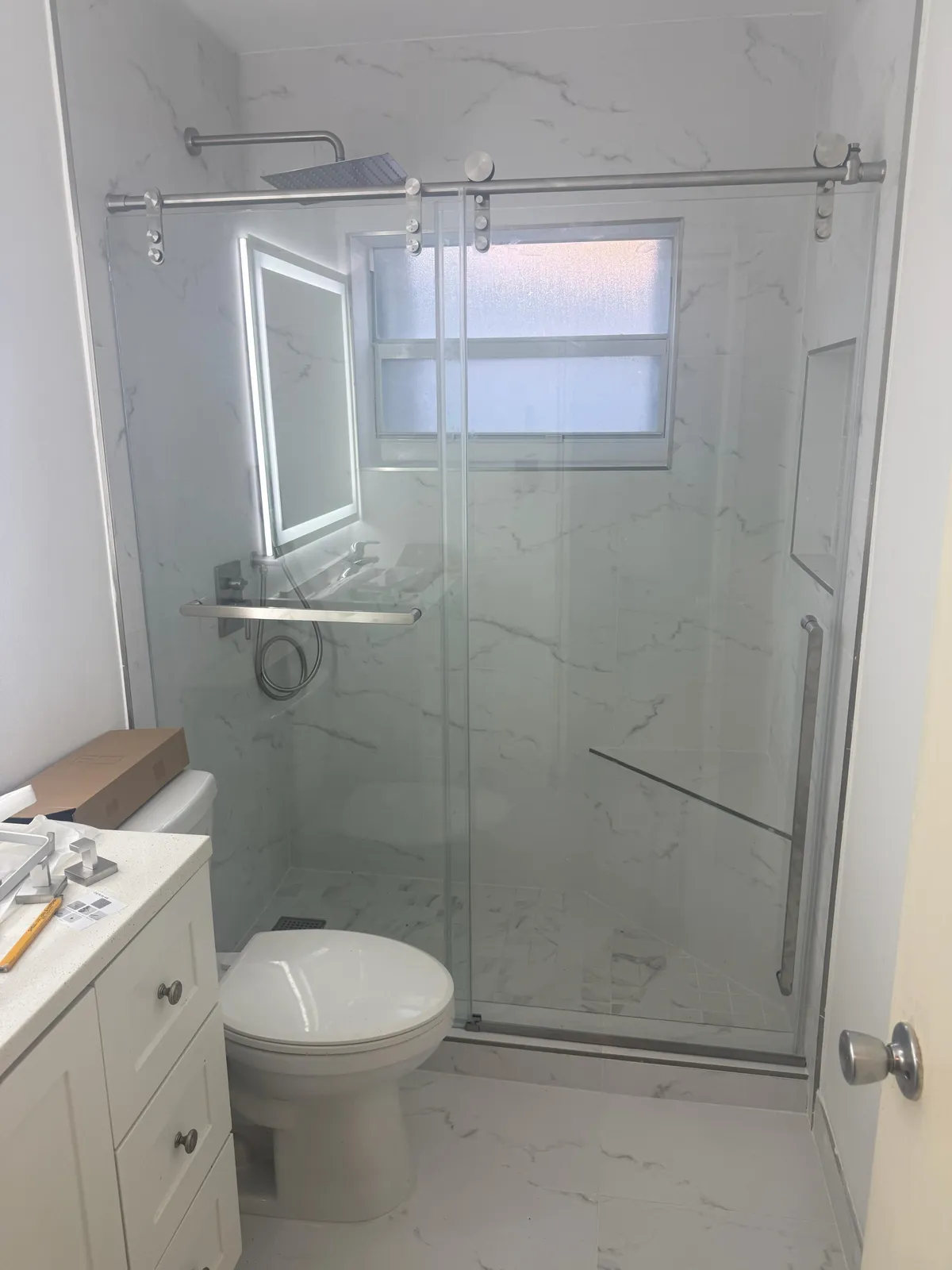
Separate the vanity, countertop, tile, fixtures and glass where applicable. Ask which selections are settled and which still depend on an allowance.
For each item, check the labor column. If a proposal identifies a vanity but says nothing about installation, request clarification rather than marking the row complete.
Also check demolition, disposal and cleanup. A list of new bathroom products does not answer what is included for removing existing items or handling project debris.
Compare the work you are buying, not just the products you want to see when it is finished.
Ask for exclusions and an extra-work approval process
Request a written list of excluded products and work, plus an explanation of how additional costs would be documented and approved. Review an allowance overage separately from newly identified work.
An exclusion gives you something specific to account for. Silence leaves a question.
Ask each bidder to review your scope list and identify what is not included. If an item matters to your project, get an explicit answer about its status.
Then ask:
- "If I choose a product above its allowance, how will you calculate the additional amount?"
- "Will that calculation identify the original allowance and the selected product's price?"
- "Could the selection change the included labor, and how would that be shown?"
- "How will you document the proposed change before asking for my approval?"
- "What approval will you obtain before ordering the item or proceeding with the additional work?"
Request the agreed process in writing. You need to understand both the price calculation and the decision you would be asked to make.
Ask separately about newly discovered repair needs
An allowance question concerns an amount already identified in the proposal. Newly discovered repair needs require their own explanation.
Ask how the contractor would assess the condition, explain the proposed repair, price it and obtain your approval before proceeding. Also ask how you would see the basis for the recommendation.
There is no need to predict whether damage will be found or assign a speculative repair cost. Your comparison should show how each bidder proposes to handle the decision if it arises.
Send a specific clarification request
Instead of asking only, "Is everything included?", identify the unanswered items:
"Please confirm the products and quantities covered by these allowances, the installation labor included, and any excluded work. Please also explain how an allowance overage or newly identified repair would be priced and submitted for my approval."
Attach your marked worksheet. Keep the response with the proposal, and update each unresolved entry only when you have an answer.
Compare our estimate by the same rules
Modernize Green Solutions (MGS) offers kitchen and bathroom remodeling in West Palm Beach, within our Palm Beach County service area. We help you navigate grants, rebates and financing so upgrades stay affordable, and our estimate includes any grants, rebates and financing you qualify for. When you request a quote, bring the same scope and selection list you send to other bidders. Ask every bidder, us included, to identify allowances and explain how a selection above an allowance would be priced and approved.
Test the comparison with a vanity example
A selected vanity with installation included and a vanity allowance with unspecified labor are not yet comparable commitments. Request the missing selection and installation details before deciding what either total means.
Imagine you receive two bathroom proposals.
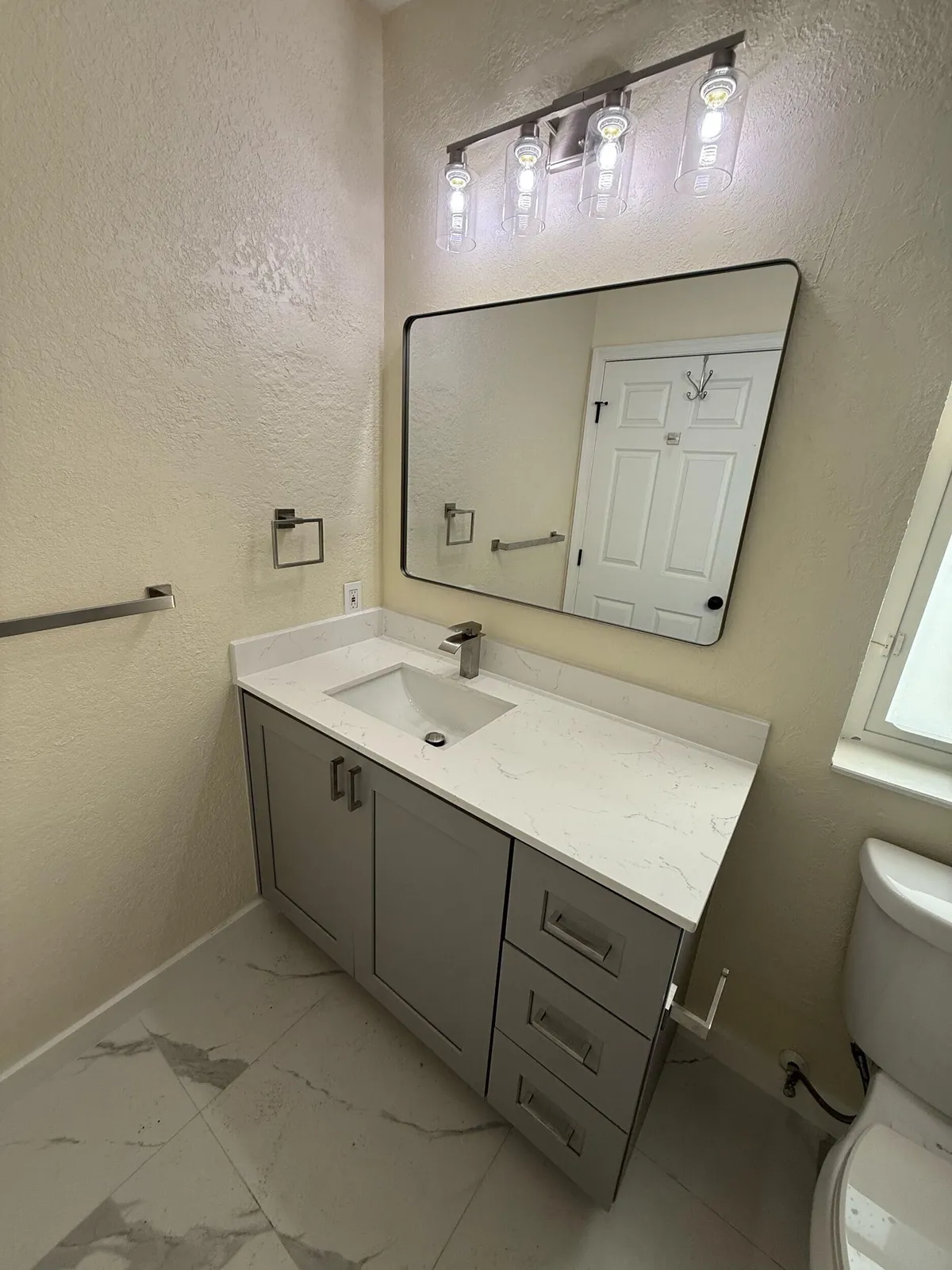
The first identifies a selected vanity, states the quantity and includes installation. The second lists a vanity allowance but does not identify a product or say whether installation is included.
The first proposal provides clearer information for that line item. It does not establish that every other part of the renovation is fixed-price or fully specified.
The second leaves questions open. It does not prove that installation is excluded or that the finished project would cost more.
Send the second bidder the same vanity selection and ask how it fits within the allowance. Request a written answer about installation. Then check the remaining rows in both proposals.
If you change the vanity you want, update both bidders. Compare the same requested result, not two totals attached to different assumptions.
Questions homeowners ask when comparing proposals
Before choosing a remodeler, clarify the difference between an allowance, a selected product and included work. Use written answers to close gaps rather than treating the proposal total as a substitute for those details.
Does an allowance mean my product has already been chosen?
No. Ask which product and quantity the allowance covers and what remains to be selected. Request the installation details and the process for pricing a selection above that amount. Do not fill in those answers based on a showroom conversation alone.
Is the lowest total enough to choose between remodelers?
Not by itself. First check whether the proposals cover the same work and comparable products. A lower total should prompt a line-by-line review, not an automatic rejection or acceptance. Resolve differences in selections, allowances, exclusions and labor before deciding how the totals compare.
What should I ask if my selection exceeds its allowance?
Ask for a written calculation showing how the additional amount would be determined. Clarify whether the selection changes installation labor or other included work. Then ask how you would approve the change before the item is ordered or the additional work proceeds.
What should I do when exclusions are not listed?
Ask the contractor to identify excluded products and work in writing. Send your scope list with that request so the answer addresses your project. Until you receive clarification, mark any uncertain item as unresolved rather than assuming it is included or excluded.
Does naming a product make the entire project fixed-price?
No. A product selection clarifies that item, not every term in the proposal. Review the remaining scope, quantities, allowances, exclusions and extra-work provisions. If you want to understand the pricing commitment for the whole project, request an explicit written explanation.
Close the gaps before making your choice
Give every bidder the same scope and selection list, then request written answers for each unresolved worksheet entry. Make your choice with a clear view of both the included work and the decisions that remain open.
Before you decide, check that you have:
- The same scope: Each bidder has received the current description of the work you want.
- Comparable selections: Product and quantity differences are identified rather than hidden inside the totals.
- Identified allowances: Each amount has a stated purpose, with included labor clarified.
- Written exclusions: Products and work left out of the proposal are expressly identified.
- Documented extra-work approval rules: You understand how additional work or an allowance overage would be priced and presented for approval.
Comparing remodel quote allowances is not about eliminating every open choice. It is about knowing which choices remain open and how they could affect the proposal you are evaluating.
Send the same scope and selection list to each bidder. Request written clarification of every allowance, exclusion and extra-work approval rule before choosing a remodeler.